
Trigger warning:
This article deals with sexual assault and definitions of rape.
What is stealthing?
We’re hearing more and more that people are experiencing this awful thing known as, “stealthing”. It’s even making it into our court systems.
Before we even go any further - let us make one thing super clear. Stealthing is rape. Stealthing is when someone tells their partner they’re wearing a condom when they aren’t, or removes it during sex.
We talk about consent a lot on our platforms. Consent is the most important part of sex. It is also a legal term that defines which acts are a fun, sexy time, and which are assault. Consent, at its most basic, is agreeing you want to do something.
So, let’s look closer at this horrible phenomenon of stealthing. Right down at a simple math level: Consenting to penetrative sex with a condom – (minus) the condom = no consent.
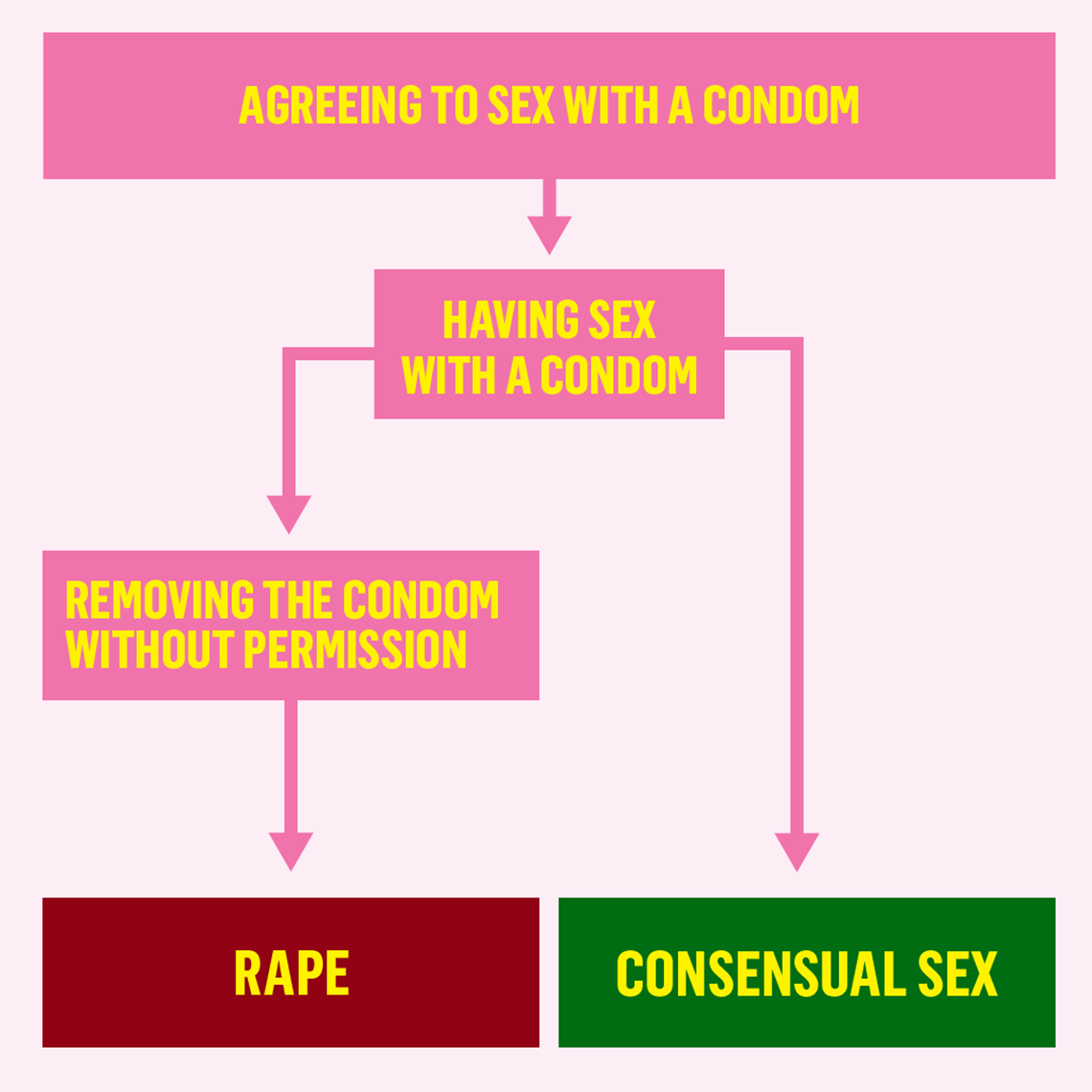
It’s really that simple.
No matter what mental acrobatics people do to twist things and convince themselves that what they’re doing is just “cheeky” and not really hurting anyone - it is harmful, unacceptable and criminal.
Disclaimer: we know, that criminalisation is not necessarily always an indicator of what is right - see Homosexual Law Reform - but in this case it actually is there to protect people from harm.
Is stealthing really rape?
Yes.
Rape is a word with a lot of weight. We don’t use it lightly. It’s a word that the people who like to ignore consent don’t like being thrown at them. They don’t think it’s fair to be called a rapist. It’s not the word they use for the awful things they do. But, let’s take a look at the dictionary definition.
Rape. Unlawful sexual intercourse or any other sexual penetration of the vagina, anus, or mouth of another person, with or without force, by a sex organ, other body part, or foreign object, without the consent of the victim.


If you are having penetrative sex of any kind - anal, oral, front-hole or vaginal - and you remove or don’t use a condom, when only sex with a condom has been consented to, what you are doing is rape. You are not only breaching the trust and bodily autonomy of your sexual partner, you are committing a crime that carries a potential prison sentence. Not to mention putting that person at risk of STIs or pregnancy.
Disclaimer: We’re aware that conviction rates are appalling and the justice system regularly deals with sexual crime poorly - that needs to change too.
So, if you think covering what you are doing in a tricky word changes things - it doesn’t. Stealthing is rape.
There is support available
If this article has brought anything up for you, or you may have realised that you have been stealthed, here is a support services list:
- Safetotalk.nz – is an Aotearoa-based 24/7 helpline for any kind of sexual harm. You can contact them in whatever way feels most comfortable – text (4334), phone (0800 044 334) and more. Trained counsellors will be able to speak with you and help support you.
- Talk to someone at your closest Sexual Health Service – they will have support pathways to help you, these differ from region to region.
- The Pohutukawa Clinic is a free, specialist medical service for anyone age 18 or over who has been sexually assaulted or abused. For an appointment or advice, phone: 0800 345 695. They're open Monday to Friday 9am to 5pm.
- If you feel comfortable speaking to the Police – there is a sexual assault unit that will be able to help you bring a complaint against someone who has harmed you. We understand that this is a big deal though, so we recommend talking to an organisation that can support you in contacting the Police and help you through the process.
- If you want someone to talk to because this story brought up some memories or thoughts for you, we offer free counselling sessions.
Worried about HIV risk?
PEP (post-exposure prophylaxis) means taking medicine to prevent HIV infection after a possible exposure. It needs to be taken within 72 hours of possible exposure, the sooner the better.